
Author: Harrison Browne, the first transgender athlete in professional hockey, co-author of “Let Us Play: Winning the Battle for Gender Diverse Athletes”, Filmmaker of PINK LIGHT (TIFF50) and Actor in Heated Rivalry.
Athlete
Sports saved my life. Growing up as a young transperson in the early 2000s was often lonely and disorienting, but sports gave me an identity outside of gender that I could latch onto: athlete. For a few hours out of my day I could step away from all the gender roles that society burdened me with and just be: the hockey player. If I didn’t have that escape when I was younger I’m not sure who I would be today or if I would even be here at all.
The life saving impacts that sports can have on young people is an experience that everyone should have access to – especially transgender and nonbinary youth. It’s no surprise to anyone reading this that transgender participation in sports has become one of the most politicized topics in recent history. All over the world we are seeing bans against trans athletes at all levels and all ages from the Olympics all the way down to elementary school. To know that there are kids out there who just want to play games with their friends and they aren’t able to simply because of how they identify, is so devastating to me. It’s the reason I am vocal and visible today for the youth who need sports the most. But there was a time where visibility as a trans athlete was something I never thought was possible.
The Trans Hockey Player
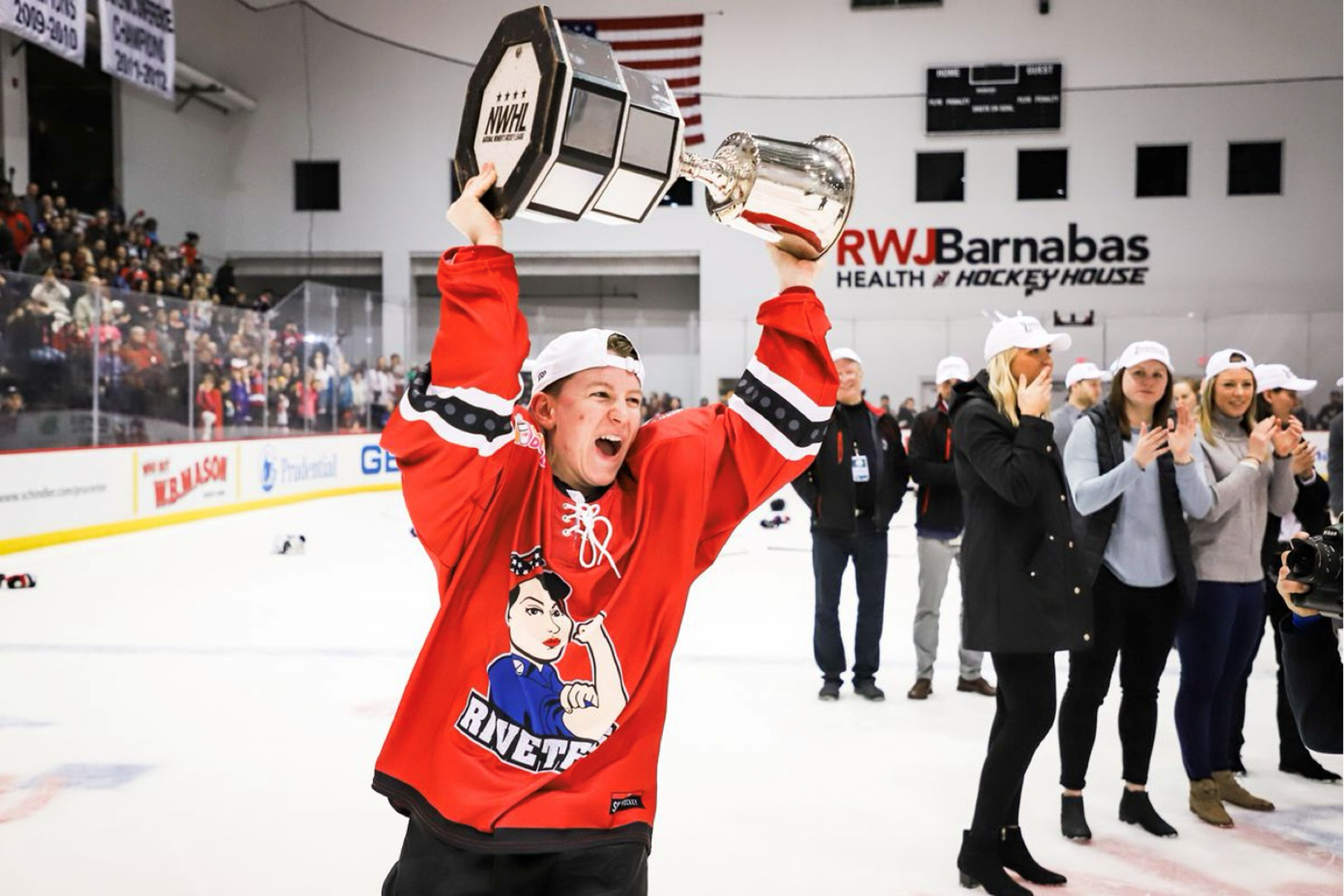
While playing in the National Women’s Hockey League, the predecessor to the PWHL, I came out publicly as the first transgender athlete in professional hockey through an ESPN article in 2016. Shortly after the article went live, my story went viral and I was hit with a whirlwind of media coverage.
I was doing interviews and documentaries with networks like TSN, Sportsnet, The Players’ Tribune, The New York Times and many more. Soon my various social media accounts were being flooded with messages from people all over the world. Trans people, trans athletes and parents of trans kids were reaching out to me saying that seeing me be my authentic self in my sport helped them feel less alone – whether they were athletes or not. This was my first experience in understanding just how crucial visibility and representation can be for a young person looking in.
When I was coming up in the sports world I had never seen another athlete like me – an athlete who was trans. If I would’ve seen someone who represented me early on in my sports career, especially a transman playing on the women’s side, it would’ve changed a lot of things and made my journey less lonely. I suddenly felt this new sense of purpose to be that person I needed when I was younger and be as visible and vocal as I could for transgender athletes.
For the last two seasons in my hockey career I devoted my time on the ice to something larger than the games. I devoted it to my community. I did more interviews, I started public speaking at conferences and universities all over North America and I made a YouTube channel documenting my journey as the only man in a women’s professional hockey league. I built a community and felt like I was making a difference.
But after back-to-back championships I couldn’t delay living as myself outside of my sport any longer. I made the decision to hang up my skates in order to pursue my medical transition. Something I was unable to do while I was still playing due to anti-doping protocol and the trans policy the league adopted when I came out.
Actor
My identity as an athlete, the trans hockey player, all went up in smoke the second I stepped off that ice. I quickly realized: I didn’t know who I was without hockey.
Trying to find a new purpose and career path proved to be harder than I expected. I was feeling pretty lost and I was starting to become depressed in the months after retiring. This is something many athletes feel after giving up their sport. All I knew was that I wanted to continue to advocate for trans people but I just didn’t know how to do that if I wasn’t a professional athlete. The only other industry that I could think of that replicated that kind of reach was the film and television industry. So I made the second transition of my life from athlete to actor.
It took a few years of training and hard work but I was able to land roles as both cisgender and transgender characters in hit TV shows like Heated Rivalry, Nancy Drew, Murdoch Mysteries, and more.
Seeing a future for yourself represented on screen is so important and the only representation I saw growing up for a future for a trans person was Boys Don’t Cry, a film that centers around a transman named Brandon Teena who was murdered for being trans. That was the only story that I had been told and I was terrified of what the future might hold for me as an out transgender person in society.
I wanted to add a different narrative to the canon of transmaculine representation on screen, one that centred around hope and joy rather than the struggle and strife we see so often. I was tired of waiting for someone else to give me that opportunity through the auditions I was receiving so I wrote it myself.
Director
I spent many months, even years trying to figure out how to tell my story in this new visual medium through my first short film PINK LIGHT that premiered at Toronto International Film Festival (TIFF) this past year. PINK LIGHT centers around a transman at two different stages of his life: 30, navigating how to get back into the sport he gave up to physically transition and 18, navigating university and playing on the women’s college hockey team.
Something that I’m so proud of through this movie is the trans representation I was able to have both on camera and behind the camera. We had 2 transmaculine leads, a non-binary lead and a transwoman behind the camera as our cinematographer. The person that plays the younger version of me is actually the first non-binary professional hockey player, CJ Jackson of the PWHL. I was honoured to have them on set telling this story and adding more non-binary representation on screen as well.
Seeing how much trans joy was reflected in all areas of my set, I saw how in owning my story I was able to help others tell theirs as well. And I wanted to do more story telling like that in other areas of my life.
Around the time of filming PINK LIGHT in 2023 the discourse around trans athletes, particularly transwomen, was starting to reach a fever pitch. I saw everyone from politicians to people within my own circle trying to debate the humanity of my community. I wanted to do something more to help this deeply misunderstood community.
Author
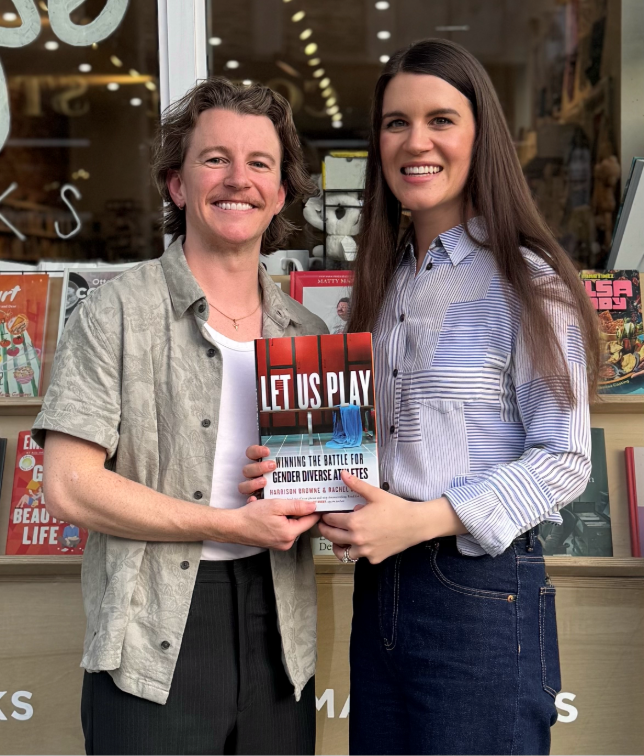
So I called on one of my biggest allies, my sister Rachel Browne to help me do this. Rachel is an investigative journalist and an extremely talented power house writer. We teamed up to pen our first book together called “Let Us Play: Winning the Battle for Gender Diverse Athletes” where we share stories from trans athletes and families of all levels and all ages mixed in with real research to dispel these myths around trans participation in sports that we were seeing in the media.
This originally started out as a memoir of my story but shifted to a larger scale project to tell more stories and spread as much awareness as we could for a variety of gender diverse individuals and athletes from all over the world.
It was particularly powerful traveling to Dallas and speaking to young trans kids and their parents about their lives and their fears of what the future holds for these resilient kids and their families. Because they’re the ones impacted most by this.
It’s a project I’m extremely proud of and an example of how storytelling can shift societal views and hopefully aid in having transgender people be treated just like any other person, because frankly we are just like any other person.
I’m finding more and more in society we’re getting away from the humanity of people. When we can put a face to term through a story, hear about someone’s struggles it humanizes them and connects us in ways that we didn’t know we were connected.
Being able to travel the world and share these two pieces of media with audiences has been one of the greatest joys during a very troubling time in society. We’ve had screenings in China, Ohio, Ottawa, Seattle, Lake Placid, New York, LA, Toronto and more. And every screening someone unexpected comes up to me to tell them how touched they were from the film and that I’ve opened their mind to a lived experience past their own. That’s always been my singular goal.
That’s the true power of storytelling in creating those avenues for the connection we so desperately need right now.